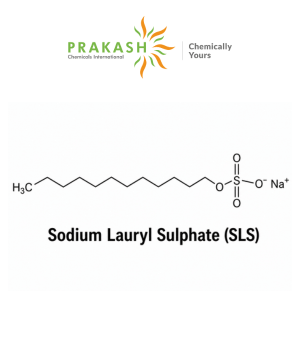












Sodium Lauryl Sulphate (SLS)
- HS Code: 34021190
- CAS NO. : 151-21-3

- General Description
- Chemical Properties
- Technical Specification
- Applications
- Compliance and Certifications
- Packaging Details
- Key Features/Benefits
- Storage and Handling
General Description
Sodium Lauryl Sulphate is a high activity anionic surfactant widely used for its strong cleansing, wetting, and foaming properties. It is commonly supplied in powder, needle, or paste form and is extensively used across personal care, pharmaceutical, detergent, and industrial cleaning applications.
SLS is valued for its excellent surface active behavior, rapid foam generation, and effective removal of oils and particulate soils. Its consistent performance and formulation versatility make it a standard ingredient in applications requiring efficient cleaning and controlled foaming.
Chemical Properties
• Molecular Weight: 288.38 g/mol
• Physical State: Solid or paste
• Ionic Nature: Anionic
• Solubility: Freely soluble in water
• pH (1% solution): Typically 7.5–9.5
Technical Specification
• Active Matter: 90% to 95% (powder/needle), 28% to 30% (paste)
Applications
Personal Care Products: Used in shampoos, toothpaste, face washes, and cleansing products for effective cleaning and foaming.
Pharmaceutical Formulations: Used as an excipient and wetting agent in tablets and oral care products.
Detergents and Cleaning Products: Used in household and industrial detergents for strong soil removal.
Industrial Cleaning Formulations: Used in degreasers and process cleaning applications.
Laboratory and Chemical Processing: Used as a surfactant and emulsifier in laboratory and industrial systems.
Compliance and Certifications
• ISO
Packaging Details
• 25 kg HDPE bags
• 50 kg HDPE bags
• 200 kg HDPE drums
Key Features/Benefits
• High active matter for efficient cleaning
• Strong and stable foam generation
• Excellent wetting and emulsifying properties
• Suitable for personal care and industrial use
Storage and Handling
• Store in a cool, dry place
• Protect from moisture and direct sunlight
• Keep containers tightly closed
• Avoid dust generation during handling